Flexible Sustainable Office Design for UK Finance Teams
The financial services workplace is changing.
Across the UK, banks, investment firms, insurers and advisory businesses are reassessing how their offices support performance, flexibility and long-term operational efficiency.
Hybrid working has shifted attendance patterns. ESG targets are influencing procurement decisions. Competition for talent is increasing pressure to improve workplace experience. At the same time, many finance businesses are still operating within offices originally designed around fixed desks, high-density occupancy and traditional departmental structures.
This is why demand for more strategic office design and build services is growing within the financial sector.
Because modern financial workplaces are no longer just operational spaces.
They are tools for attracting talent, supporting client confidence, improving collaboration and future-proofing organisations against changing ways of working.
Why Financial Services Offices Are Evolving
Historically, financial workplaces prioritised structure, hierarchy and desk-based working.
But in 2026, financial services teams are operating differently.
Many organisations now require offices to support:
Hybrid collaboration
Confidential conversations
High-performance focus work
Client hospitality
ESG commitments
Employee wellbeing
Flexible team growth
Technology integration
Cross-functional working
As a result, many firms are rethinking whether their existing environments still align with how their teams actually work.
This is driving a wave of:
Workplace refurbishments
Headquarters repositioning
Sustainability upgrades
Hybrid workplace redesigns
Office modernisation projects
The Shift Towards Bespoke Workplace Design
One of the biggest mistakes organisations make during workplace transformation is relying on generic office layouts.
Financial services businesses operate differently from creative agencies, tech startups or coworking environments.
Compliance requirements, data security, client expectations and working styles all influence how space should function.
This is why bespoke workplace design is increasingly important for finance teams.
Rather than applying trend-led layouts, bespoke workplace strategies focus on:
Team behaviours
Operational requirements
Client interaction
Departmental workflows
Occupancy patterns
Technology usage
Future scalability
The goal is to create an environment that supports the organisation's specific way of working rather than forcing teams to adapt to a generic layout.
Flexible Working Office Design for Financial Teams
Hybrid working has permanently changed how many financial businesses use space.
However, flexibility does not simply mean removing desks.
Effective flexible working office design requires careful planning around how different teams operate throughout the week.
For example:
Investment teams may require more focused, acoustically controlled environments
Advisory teams may prioritise client meeting spaces
Leadership teams may need confidential collaboration zones
Operations departments may require adaptable team neighbourhoods
Hybrid staff may need touchdown spaces rather than permanently assigned desks
The most successful workplace strategies balance flexibility with operational clarity.
That often includes:
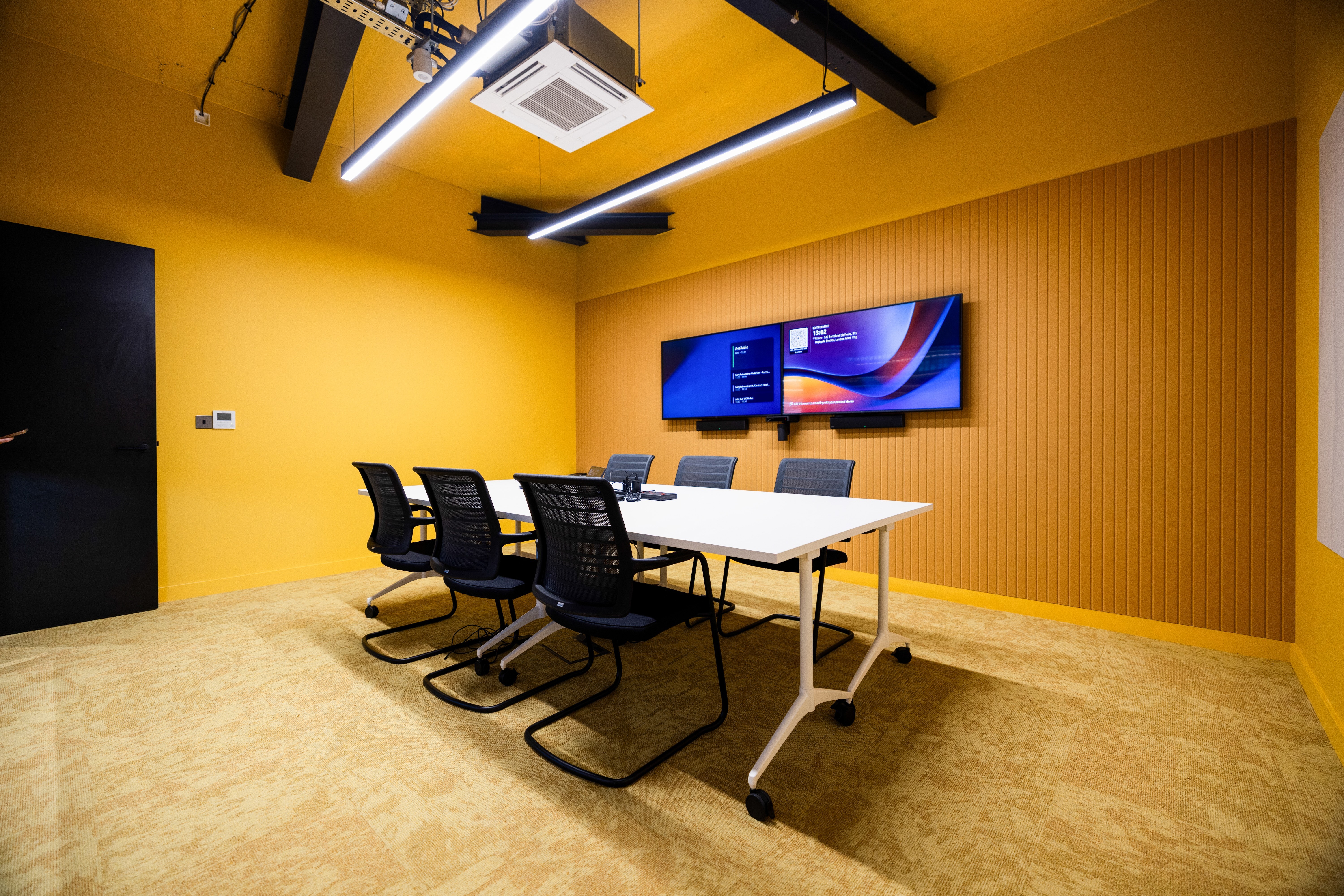
Modular meeting environments
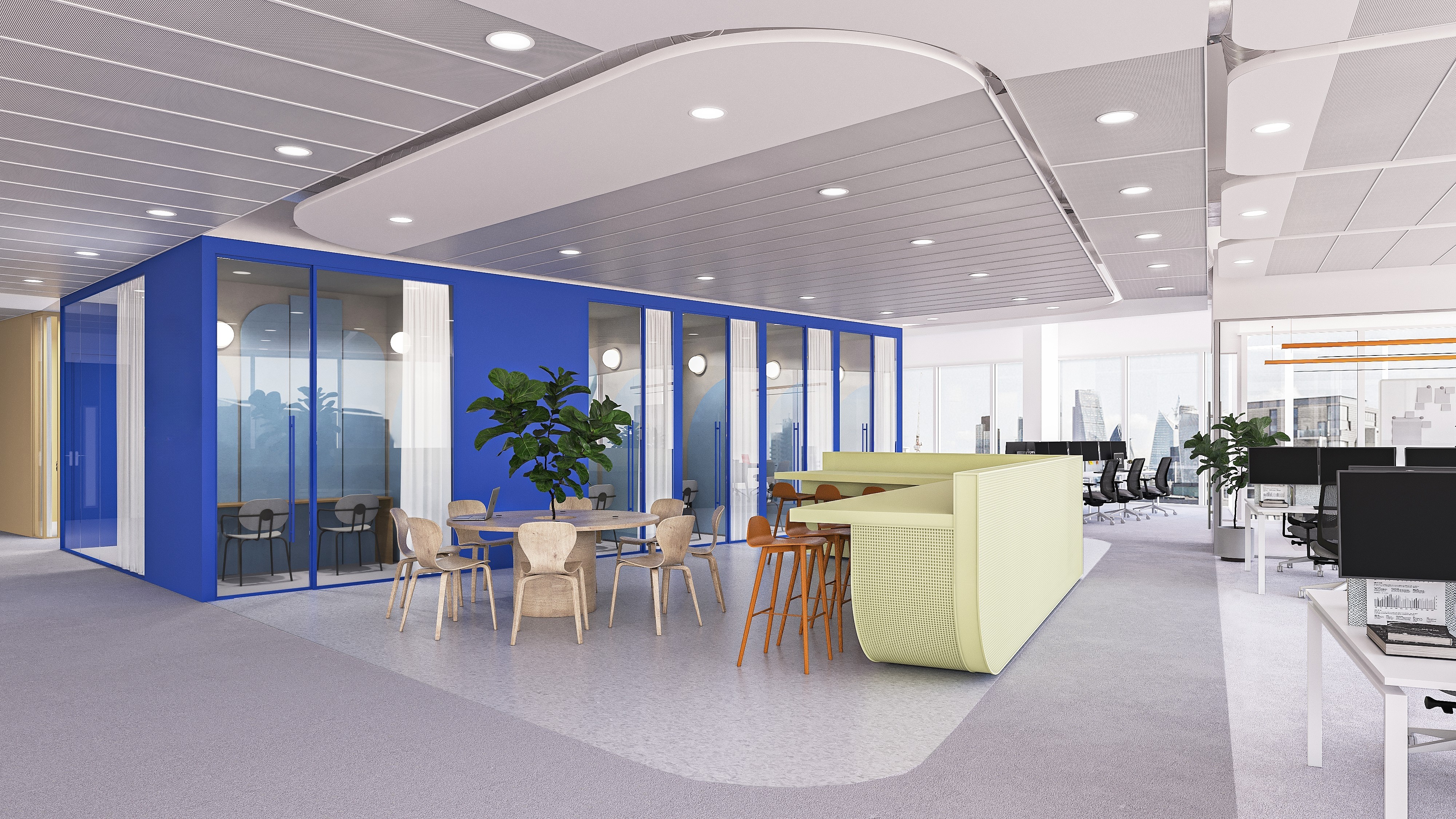
Flexible collaboration spaces
Quiet focus areas
Acoustic booths
Hospitality-led breakout spaces
Multi-functional event areas
Technology-enabled hybrid meeting rooms
Importantly, flexibility should improve workplace effectiveness rather than create ambiguity or operational friction.
Why Sustainability Matters in Financial Services Office Design
Sustainability is no longer viewed as a secondary workplace consideration.
For many financial institutions, ESG performance now influences:
Investor perception
Recruitment
Procurement
Brand reputation
Occupier strategy
Regulatory positioning
As a result, sustainable office design is becoming a key priority during refurbishment and relocation projects.
This extends beyond simply using recycled materials.
A sustainable workplace strategy often considers:
Reuse of existing infrastructure
Responsible material selection
Energy-efficient lighting and systems
Space utilisation efficiency
Furniture reuse
Embodied carbon reduction
Longevity of design decisions
Waste reduction during construction
Many organisations are also reassessing whether full strip-outs are necessary.
In some cases, retaining and adapting existing architectural elements can significantly reduce both environmental impact and project cost.
Wellness Is Becoming a Business Performance Issue
Employee wellbeing has become increasingly tied to workplace strategy within financial services.
Long hours, high cognitive load and screen-intensive working patterns mean office environments can directly influence focus, stress levels and employee retention.
Modern financial workplaces are increasingly incorporating wellness-focused design features such as:
Improved natural light
Better air quality
Acoustic control
Biophilic elements
Quiet recharge spaces
Ergonomic furniture
Wellness rooms
Flexible working environments
Improved circulation and movement
These decisions are not purely aesthetic.
They can directly influence:
Concentration
Cognitive performance
Collaboration quality
Absenteeism
Employee satisfaction
Talent retention
As competition for experienced talent continues, workplace experience is becoming part of employer brand strategy.
The Importance of Construction Management in Occupied Financial Workplaces
Many finance firms cannot pause operations during workplace refurbishment projects.
This makes construction management particularly important within financial services office design.
Effective office design and build services should minimise disruption while maintaining security, operational continuity and professionalism.
This often involves:
Phased delivery programmes
After-hours works
Noise management
Temporary relocation strategies
Secure access planning
Clear communication schedules
Strict compliance processes
Construction planning becomes especially critical within:
Trading environments
Regulated financial businesses
Client-facing headquarters
High-security workplaces
A well-managed project protects both operational performance and employee experience throughout delivery.
Corporate Headquarters Interior Design Is Becoming More Strategic
For many financial organisations, headquarters spaces are increasingly expected to communicate culture, credibility and stability.
This has shifted corporate headquarters interior design away from purely functional planning toward more experience-led environments.
Modern finance headquarters now often incorporate:
Hospitality-inspired arrival spaces
Flexible client event environments
Brand-led workplace storytelling
High-quality social spaces
Multi-purpose collaboration hubs
Executive briefing areas
Enhanced technology integration
These environments are designed not only for employees, but also for clients, investors and future talent.
The workplace itself increasingly acts as a physical expression of organisational identity.
What Successful Financial Services Office Design Looks Like in 2026
The most effective financial workplaces today are not simply modernised versions of older office models.
They are intentionally designed around:
Hybrid operational patterns
Employee wellbeing
ESG objectives
Flexible growth
Organisational culture
Client experience
Long-term adaptability
This is why many businesses are moving away from rigid layouts and toward more responsive workplace strategies.
Because successful office design is no longer about maximising desk density.
It's about creating environments that support performance, flexibility and resilience over time.
Choosing the Right Office Design and Build Services Partner
For financial services organisations, workplace transformation requires more than creative concepts alone.
The right partner should understand:
Workplace strategy
Operational continuity
Sustainability objectives
Construction management
Compliance requirements
Employee experience
Hybrid workplace planning
Most importantly, they should be able to translate business objectives into physical environments that genuinely support how teams work now and how they are likely to work in the future.
Because in 2026, the most valuable workplaces are not the most expensive.
They are the ones most closely aligned with organisational performance, culture and long-term adaptability.